Beyond Purdue No. 002 / Architecture
The 3-Channel Architecture That Replaces Purdue
The Purdue Model gave us a structure to separate OT from IT. But that separation no longer works—at least not the way it was intended.
The Purdue Model gave us a structure to separate OT from IT. But that separation no longer works—at least not the way it was intended.
Today, industrial operations don’t just produce data—they depend on it:
📊 For billing
🔍 For predictive maintenance
🧠 For AI and cloud analytics
🛡️ For cybersecurity and anomaly detection
Trying to funnel all that through a 30-year-old layered architecture? That’s a recipe for chaos—or compromise.
Goodbye layers. Hello channels.
What If the Problem Isn't Layers—But the Lack of Purpose?
Instead of stacking data in rigid layers, we need to think in channels.
At Bohemia Market, we’ve implemented a new model across power stations, refineries, and solar plants. One that’s already proven.
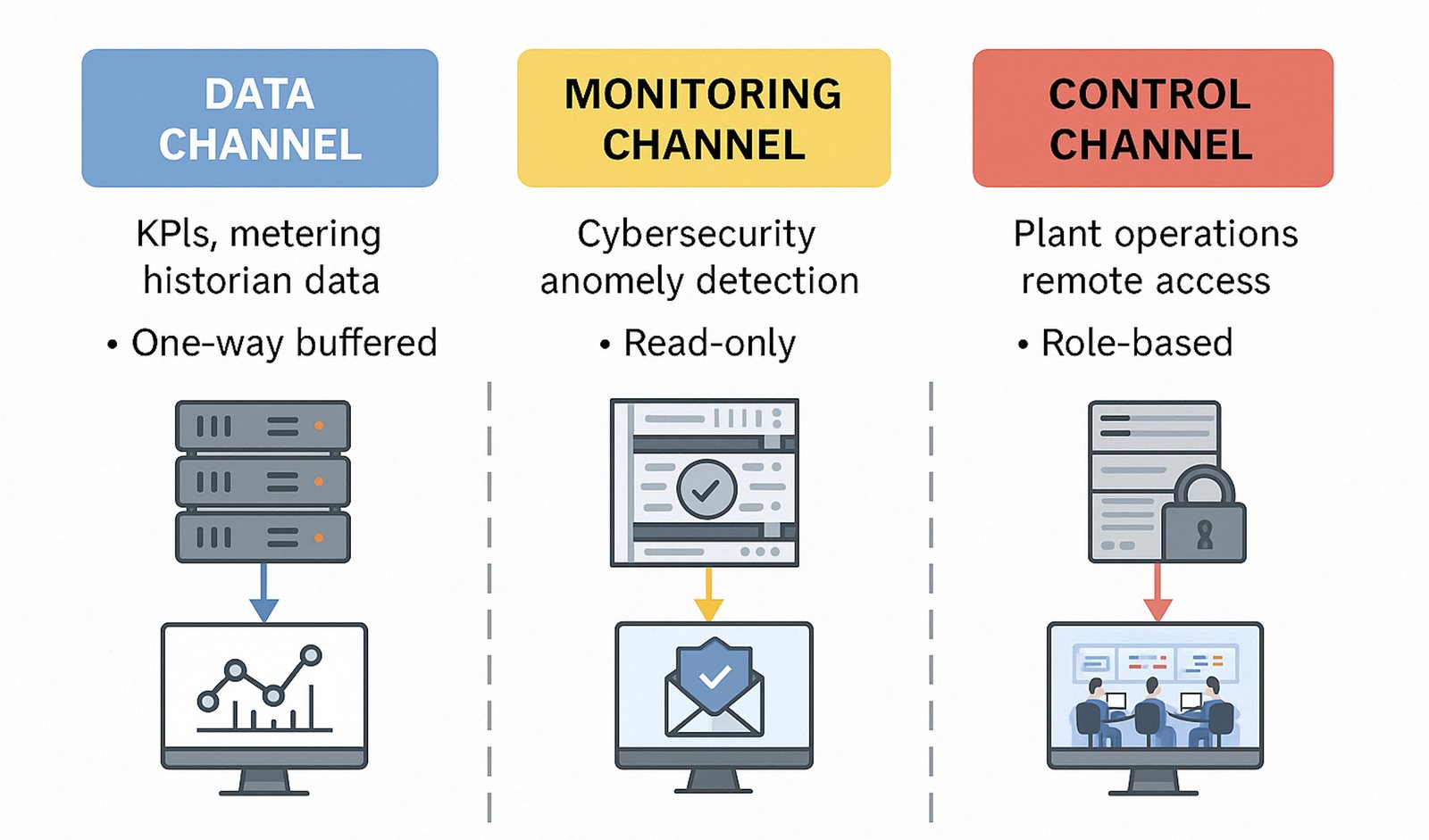
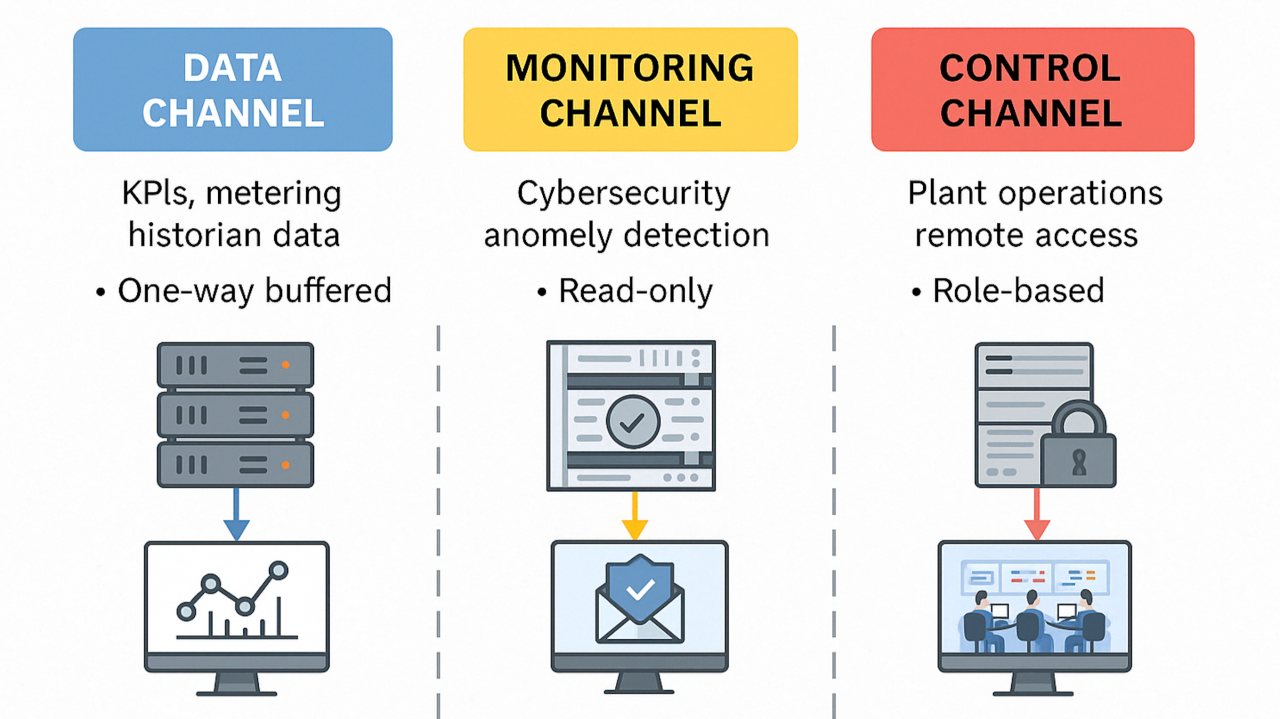
We call it the Three Channel Model:
🟦 1. The Data Channel
For structured information that flows from OT to IT:
- KPIs, process values, metering data, billing
- Read-only, one-way (often via data diode)
- Buffered and timestamped for accuracy and audibility
This is where billing happens. Where reports are generated. Where predictive maintenance starts.
But let’s be clear:
Prediction doesn’t work when the input is chaos. “Where there is no information, you cannot fabricate one.” —Nassim Taleb, Fooled by Randomness
In most ICS environments, data is inconsistent, misnamed, timestamped wrong, or simply misunderstood. That’s why our Data Channel is structured, governed, and enriched with metadata before it leaves OT.
✅ Use Case: A power plant billing system now collects accurate data every 6 minutes.The result? No more disputes. No more penalties. Millions recovered.
🟨 2. The Monitoring Channel
For observability, not control:
Recommended by LinkedIn
- Cybersecurity events, system health, alarms
- Used by SOCs, auditors, compliance teams
- Always non-intrusive, always controlled
✅ Use Case: Across 11 power stations on three continents, all critical systems are monitored centrally—while keeping full control locally.
🟥 3. The Control / Service Channel
For authenticated, logged, and secured operations:
- Used by service engineers or control room operators
- Access is tightly governed, role-based, and auditable
- Critical during outages, support calls, and remote interventions
✅ Use Case: In a turbine monitoring deployment, secure VPN tunnels and Active Directory logins allow controlled remote servicing—without exposing the ICS to the internetICS Secure Data Transfer.
Why Channels Beat Layers
Layers blur responsibility. Channels define it.
- 🔐 Each channel has a purpose, a policy, and a perimeter
- 📦 No channel is open “just in case”
- 🧩 The model scales with your needs—across clouds, sites, and suppliers
This is not theory. It’s already reshaping industrial infrastructure.
🚀 What’s Next in Beyond Purdue?
Now that the model is clear, it’s time to show what happens when OT data is structured and understood.
🔜 Why OT Data Is Useless Without Meaning How we turn chaotic tags and legacy formats into structured insights that IT, finance, and AI can trust.
🔜 Firewalls Are Not Enough Why real segmentation needs more than a DMZ—and how one-way communication changes the game.
🔜 Control Room 2.0 Real-time dashboards, AWS analytics, and centralized command across countries.
🔜 Cloud Without Fear The secure, compliant blueprint for ICS cloud integration—done right.
🔜 Results That Matter From billing accuracy to turbine reliability—what transformation actually looks like.
🔜 How to Start Your Own Journey Beyond Purdue What to do today, with the tools you already have.
👉 Follow me for more insights. Because moving beyond Purdue isn’t just a slogan—it’s a new way to think about ICS architecture.