Beyond Purdue / Resilience
Welcome in 2025 - The Blackout Wasn't Random. It Was Designed That Way.
Let’s start with what we all agree on: we’re collecting more data than ever. Terabytes pour out of sensors, smart devices, meters, control rooms. Dashboards are everywhere. Alerts flood inboxes....
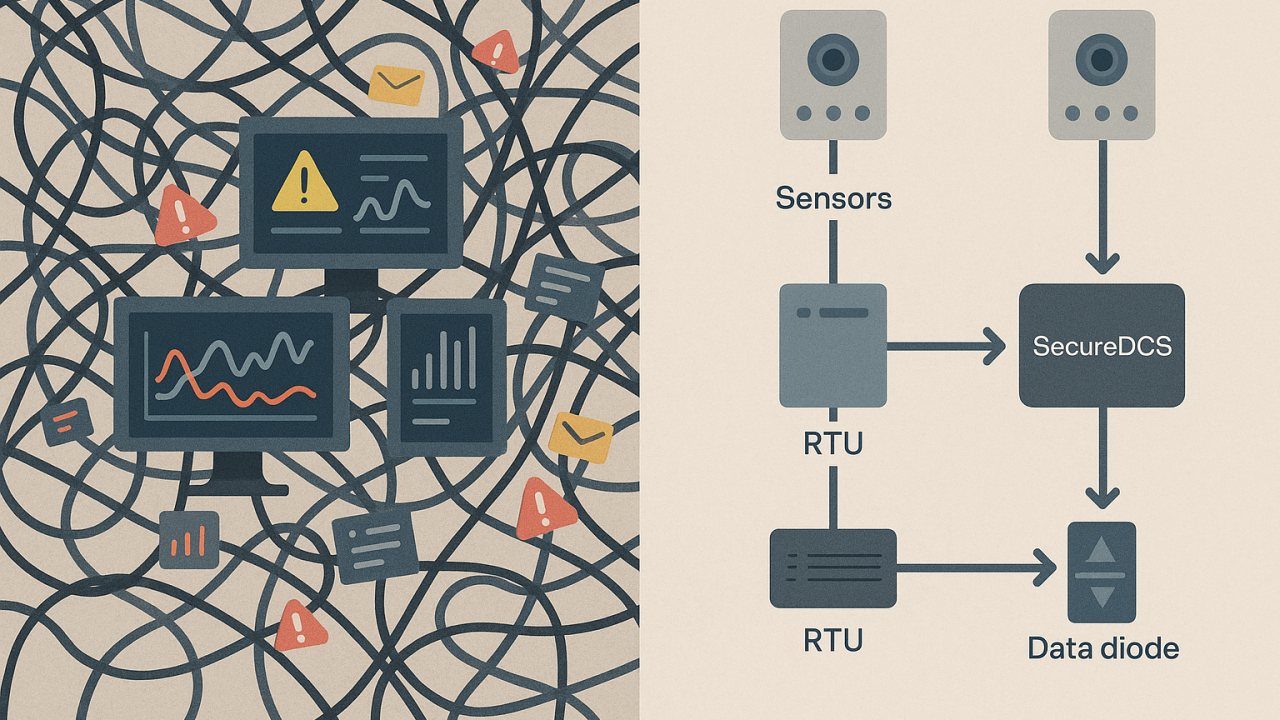
Let’s start with what we all agree on: we’re collecting more data than ever. Terabytes pour out of sensors, smart devices, meters, control rooms. Dashboards are everywhere. Alerts flood inboxes. Graphs and maps light up every screen.
And yet… when the grid goes down, nothing reacts fast enough. Nothing stops the collapse. At that point, even the internet is gone — and most telecom operators are not prepared for that reality. Except, of course, for Elon Musk's Starlink — which is the only functioning and truly resilient network left up there.
The recent blackout in Spain and Portugal wasn’t caused by a lack of data. It was a failure of policymakers — a failure to demand structured architecture to manage that data effectively. Hopefully, the data from this crisis will finally show we can’t continue on this course.
And yet… when the grid goes down, nothing reacts fast enough. Nothing stops the collapse. At that point, even the internet is gone ....
The Fast-Track to ICS Digital Transformation
Let’s face it—can you name a single real result of Industry 4.0? Or is it just a big marketing SCAM? I believe the latter. It’s time to rethink how we work with data if we want any real knowledge out of it. Recent projects and extensive work with clients confirm what we’ve all seen for years: we’re still feeding systems designed in the 1990s or early 2000s – in a time when cybersecurity wasn’t same issue as is today. Rigid databases. Obscure formats. And the same sensor ends up with several different names across multiple different proprietary systems.
It’s time to rethink how we work with data if we want any real knowledge out of it.
This creates enormous chaos that prevents companies from effectively monitoring, evaluating, and protecting their assets. To address this challenge you need a solution focused on asset management, cybersecurity, and turning existing data into usable knowledge. These solutions must to include:
- Flexible Data Management: Instead of enforcing rigid naming standards, multiple names, description and metadata must cooexist. Ideally human language should be used wherever possible, making the data clear and easy to work with, while keeping the original tagging linked for traceability.
- Providing secure, unidirectional data transfer, eliminating external cybersecurity threats.
- From Data to Knowledge: Turning existing, inconsistent data into actionable insights for decision-making and predictive maintenance..
- Seamless integration into existing ICS environments, including SCADA, DCS, and PLC systems, without the need for costly infrastructure changes
- Real-time asset monitoring with consistent and organized data.
- Operational efficiency, improving decision-making and automation
- Real-Time Monitoring and Predictive Insights: Optimize Operations, Improve decision making & Reduce Costs
What’s in Place
The foundation for secure, governed data flow exists (see more at ICS Secure Data Transfer):
When it comes to securing control systems, many rely on data diodes as a quick fix. Manufacturers like Advenica, OWL, Waterfall, and Paton build solid hardware — but without clear integration and architecture, these devices alone achieve very little. They require complex software stacks, expensive licensing, and still leave the hardest part — reliable, contextualized data acquisition — unsolved.
That’s exactly why we built two focused platforms:
Recommended by LinkedIn
SafeRTU device: a radically simplified, cyber-secure remote terminal unit with enforced one-way communication
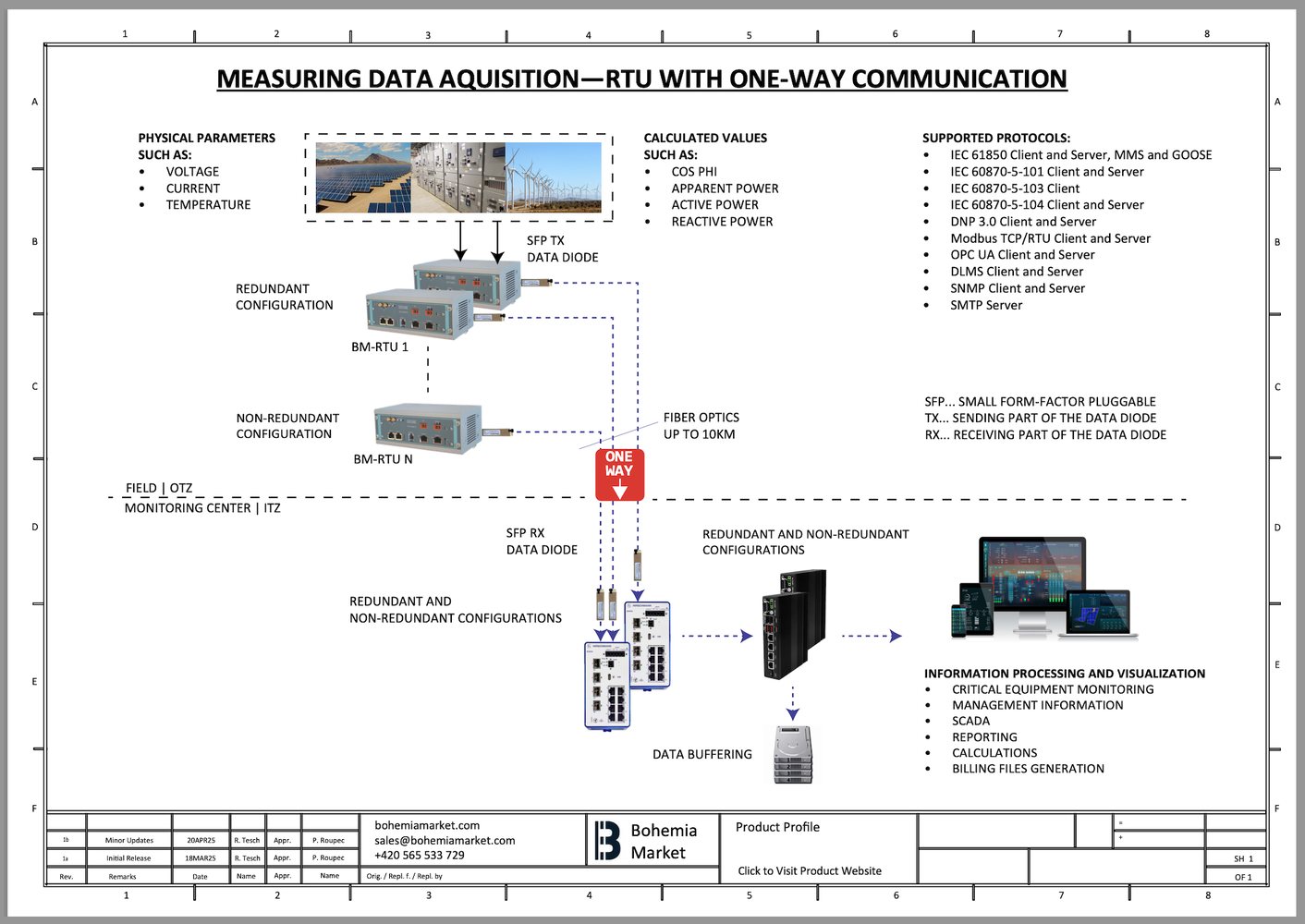
SecureDCS platform for delivering and processing data out of DCS systems and many different data sources
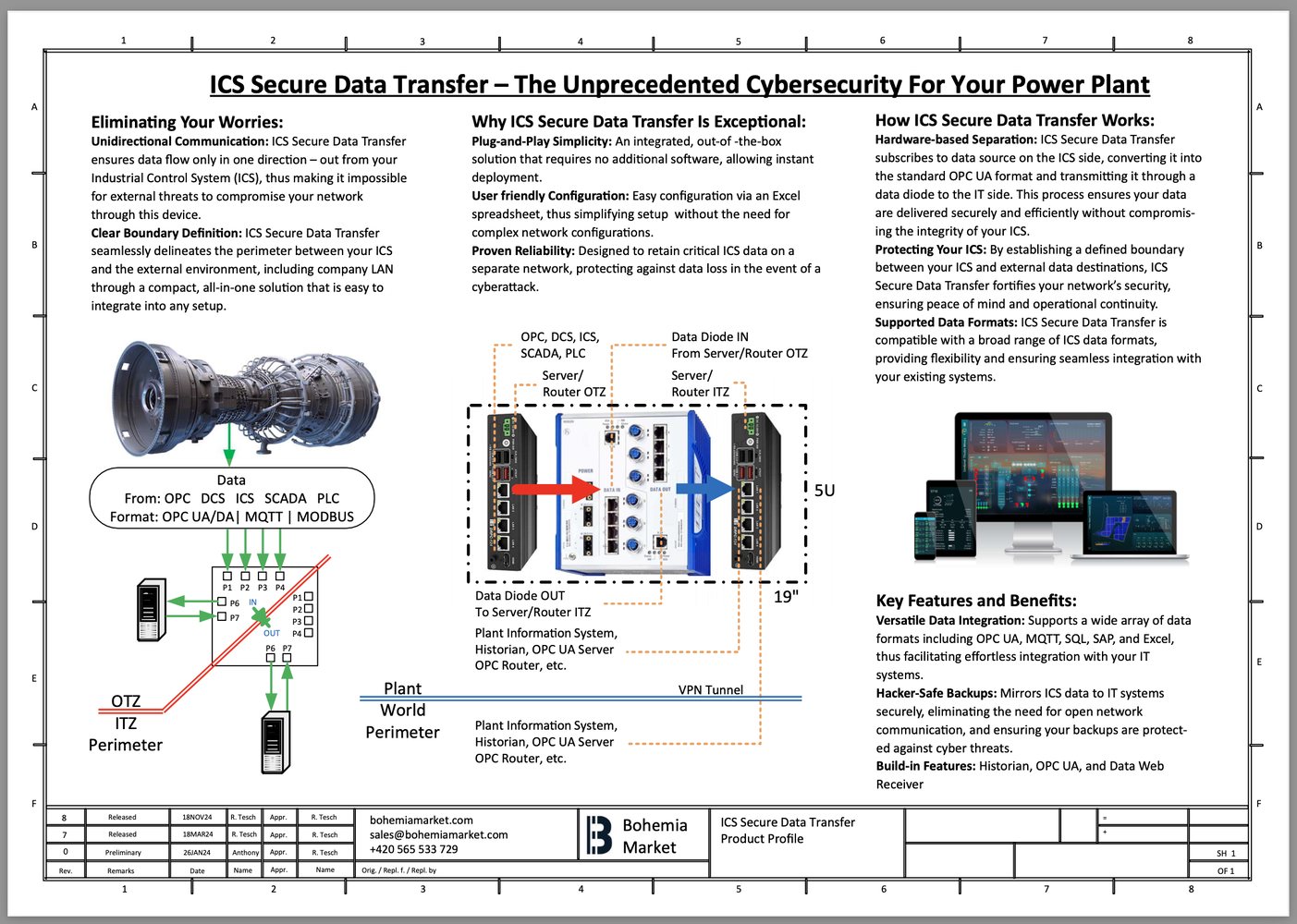
Both are designed to serve a specific role within the Multi-Channel Architecture — ensuring that the right data flows, securely, to the right place, at the right time, without exposing control systems to risk.
This isn’t about isolating systems for the sake of compliance. It’s about making the data useful — for billing, analytics, monitoring, and business continuity — while keeping the core untouched.
At WUC 2025, we’ll be launching our SafeRTU device: a radically simplified, cyber-secure remote terminal unit with enforced one-way communication. It’s built to collect real-world physical data, integrate with multiple sources, and deliver it with zero attack surface.
If you're serious about modernizing ICS data architecture — let’s meet in Abu Dhabi. Or message me directly to explore how this works in practice.
The next step is to work with the data we already have. That means processing it — not just storing it.
We are opening up a community effort to publish our key Node-RED calculation flows and transformation logic, helping others replicate and improve on structured data handling for billing, fuel planning, anomaly detection, and more.
By building an open repository and sharing how real-time OT data is turned into usable, reliable information, we invite others to contribute and adopt. This is how structure scales: not through regulation, but through shared practice.
If you're interested in contributing, exploring the tools, or testing ideas, drop me a message.