Beyond Purdue No. 073 / Metering, Billing, Data nodes, Data diodes
Notarized billing data: seal the hour where it is born
A ledger proves nobody changed the record after it was written. It does not prove the record was true when it was written. Billing data should be notarized where it is born, at the meter, not afterwards in the cloud.
In June 2025 I wrote that notarizing garbage won't make it secure (Notarizing Garbage Won't Make It Secure). Six vendors and one EPC had built a billing chain that did not work. Then vendor number seven arrived with blockchain notarization. Another timestamp, another ID, another signed copy of data that was already broken.
I still believe that. But I never said notarization is useless. I said it sits in the wrong place.
Last week I described the settlement hour as a piece of evidence (The Hour That Cannot Be Doubted). Today I want to put the two ideas together. Billing data should be notarized where it is born, at the meter. Not afterwards, in the cloud.
The ledgers already exist
Big players are already doing this. Siemens Energy, TÜV SÜD and the German Energy Agency dena built CertaLink, a blockchain system that tracks low and zero carbon energy from source to consumption (Siemens Energy). dena runs a node in the network and checks the data before it goes onto the blockchain (dena). Since 2023 it has been piloted for green hydrogen at Nobian's electrolysis plant in Bitterfeld (Oxford Institute for Energy Studies).
This is good work. A ledger proves that nobody changed the record after it was written.
It does not prove the record was true when it was written.
Where the number comes from
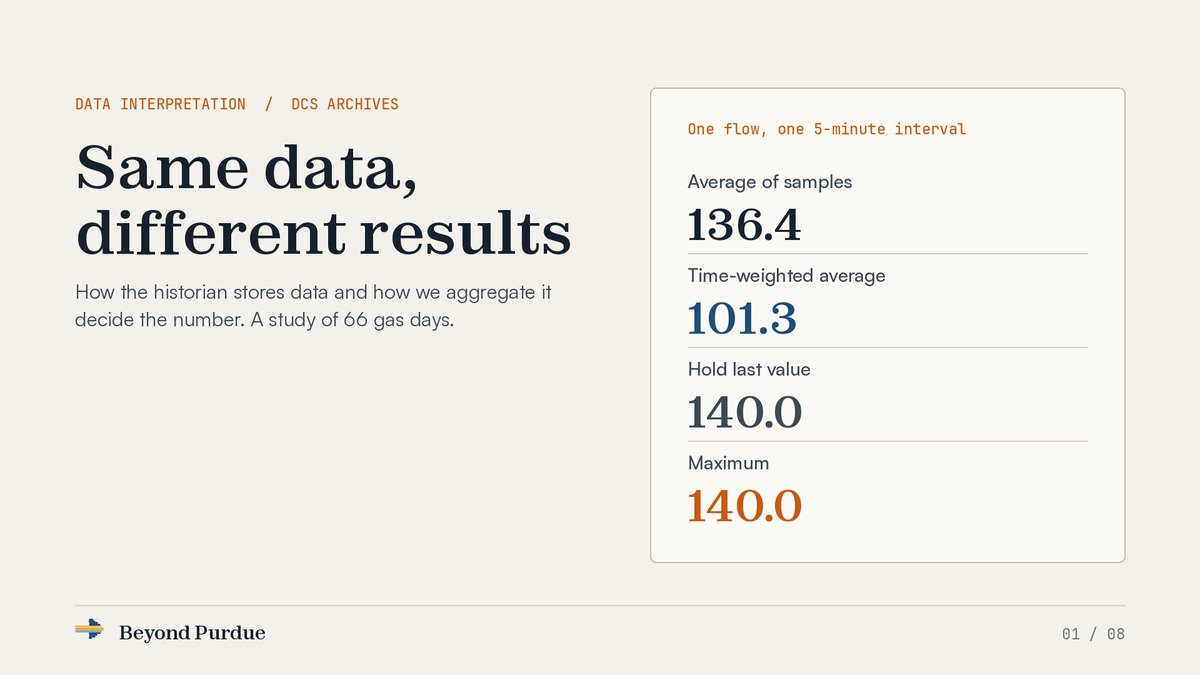
Every token, every certificate, every invoice starts from a meter value. That value belongs to the operator. It passes through the flow computer, SCADA, a historian, a spreadsheet and an e-mail before anyone signs it.
I have seen what happens on that road. A billing system that needed validated files every six minutes, fed by metering data that arrived at random times with wrong timestamps (When 6 Vendors and 1 EPC Collide). Every hour correct and every hour in the wrong place, because the server clock and the billing timezone disagreed.
And the meter does not remember for long. Flow computers commonly keep around 35 days of hourly records (Schneider Electric). Disputes run for years.
Nigeria's regulator found that about 40 % of the volumes booked as crude losses were measurement inaccuracies, not theft. Its answer was simple: let no one be a judge in his own case (NUPRC).
If you sign that number in the cloud, you have a very well protected copy of whatever arrived.
The standards stop at the box
The standards are good inside the device. API 21.1 asks for unedited hourly records, a configuration log and an event log with old and new values (ASGMT). European legal metrology says the event log cannot be deleted or changed without breaking a seal (WELMEC 7.2). OIML D 31 asks that transmitted measurement data be protected for authenticity and integrity (OIML D 31).
Then the hour leaves the box. From there on, in most plants I know, plain numbers move between systems that trust each other because they sit on the same network.
Gas can be checked again. Power cannot.
With gas or oil, if the meter is in doubt, you can run the prover again, check the chromatograph, look at the sample.
With electricity you cannot. Revenue metering has main and check meters, but settlement takes place at one defined meter point (IESO). When the interval is over, the energy is gone. The data is the only thing left.
A power station sits on both sides. Fuel gas comes in through a custody meter, and the gas is settled by the hour. Electricity goes out through a revenue meter, settled by its own interval. Both invoices rest on numbers that, today, someone simply has to believe.
The stakes are not small. A 0.1 % error at one large pipeline pump station is worth more than USD 200,000 a day (Emerson).
A notary at the meter
This is what we are building with NoiseLock. A notary that sits at the meter and seals every billing interval when it is born.
- Raw values, recorded on change, with their own timestamps.
- The configuration and every change in that interval travel with the result.
- Each interval carries the fingerprint of the one before. Delete or edit one, and the chain breaks visibly.
- Signed by the device that measured it.
- Witnessed by the physical world: grid frequency, satellite time and the sound of the meter run. A witness nobody in the room controls.
- Anchored once a day to a public timestamp anyone can check (OpenTimestamps), or to a qualified time stamp, which the law presumes accurate (eIDAS Article 41).
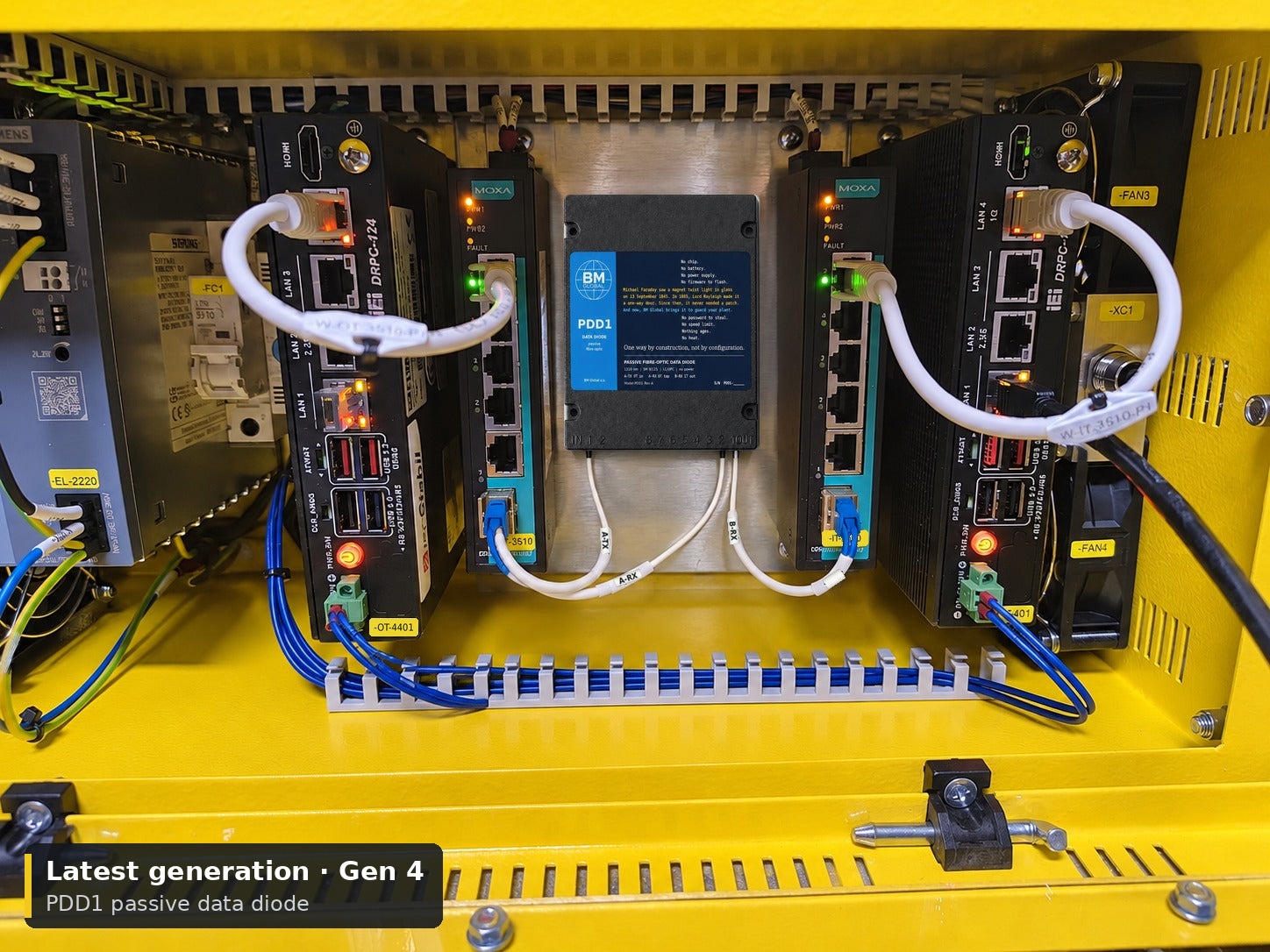
- Sent one way, through a passive optical diode, to seller, buyer and regulator at the same moment.
Why the noise? Because notarizing alone is not enough. A clock can be set back. A key can be stolen. A signature can be made later, by whoever holds the key. The environment is different. It is full of noise nobody can repeat: the grid frequency wandering around 50 or 60 Hz, the same across the whole grid, and the sound of the meter run. Forensic experts already use the grid frequency to prove when a recording was made (Springer). Record that noise with the hour, and the hour cannot be made again afterwards. Not even by us. That is the idea behind NoiseLock.
Once sealed, the record is frozen. Nobody edits it, including us. A correction is a new record that points to the original, with the reason and the name of who approved it.
The registry and the notary
So I don't see this as a competitor to the ledgers. CertaLink-type systems are the registry. The notary at the meter is what feeds them something worth registering.
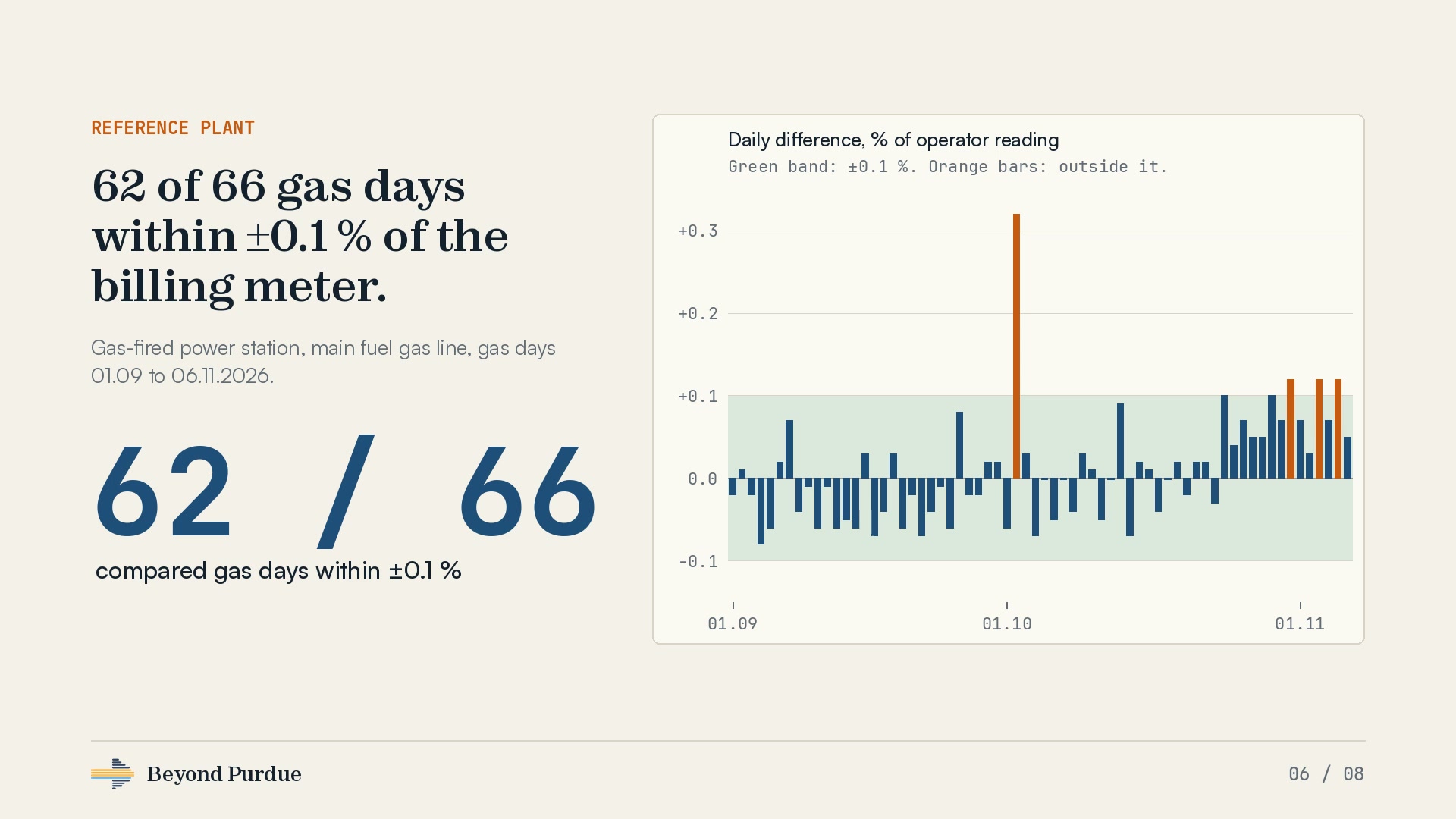
The raw data travels with the seal, so anyone can recalculate. We already did it for hourly gas. From data the DCS already had, 62 of 66 gas days came within ±0.1 % of the billing meter (Your Control System Already Has the Data). The days that did not match are the interesting ones. That is where the questions start.
Who holds the stamp
A seal is only as good as the one who keeps it. That is still an open question, and I would like to hear opinions. It could be the plant, an inspection body that already certifies the meters, or the regulator.
The law already has a tool for part of it. A qualified electronic time stamp carries a presumption of the accuracy of the date and time and of the integrity of the data it is bound to (eIDAS Article 41).
For an economist or a mediator this is the interesting part. Records that neither side can contest end arguments before they reach a mediator or a court.
What it does not do
It does not make a meter accurate. Proving and calibration stay.
It is not cybersecurity. It does not stop an attack. It makes tampering visible.
And it is not legally binding until contracts and regulators accept it.
What it does is take one question out of every billing dispute: "was this number changed?" What is left is the honest engineering question: "was it measured well?"
Where Beyond Purdue fits
Independent nodes. Source-time history. One-way, shout-only communication. Diodes as enablers. This is the same architecture, now asked to testify.
Purdue sorts devices by where they sit. Billing forces us to sort data by who is allowed to touch it. For the hour that decides who pays whom, the answer should be nobody, after it is born.
Metering engineers, auditors, regulators: who signs your billing data today? And where, before or after it leaves the meter?