Beyond Purdue No. 070 / Data nodes, DCS, Existing data
Your control system already has the data
Years of plant data sit in the DCS archive. You can read it, process it your own way, and you do not need the OEM for it.
Every DCS in a power plant records far more than the operators ever look at. Flows, pressures, temperatures, counters. Second by second in the live stream, hour by hour in the archive. Years of it, kept on disks that nobody reads.
Most plants believe that to use this data they need something new: a new platform, an upgrade project, or the OEM to come and do it for them. They do not.
The data is already there
The control system has done the hard part. It measures, scales, calculates and stores, with timestamps. What is missing is not data. It is a way to read it and work with it without touching the process.
You can read it without changing anything
A read-only reader listens to what the DCS already publishes and asks the archive for what it already keeps. Nothing is written back. The DCS keeps doing its job exactly as before.
Then you process it your way
Once the data is out, you decide what to do with it:
- Recalculate totals for any hour, day or month, in the unit you need.
- Check every closed hour against the archive and see where live data was incomplete.
- Run any past period again, months later.
- Compare it with a billing meter, a lab result or a contract value.
- Show it on a screen for managers who will never open an operator station.
You do not need the OEM for this
The data belongs to the plant. Using it does not require a new system from the vendor or a new module licence. It needs engineers who understand how the control system calculates, and a tool that reads carefully and keeps what it reads.
An example from a gas-fired power station
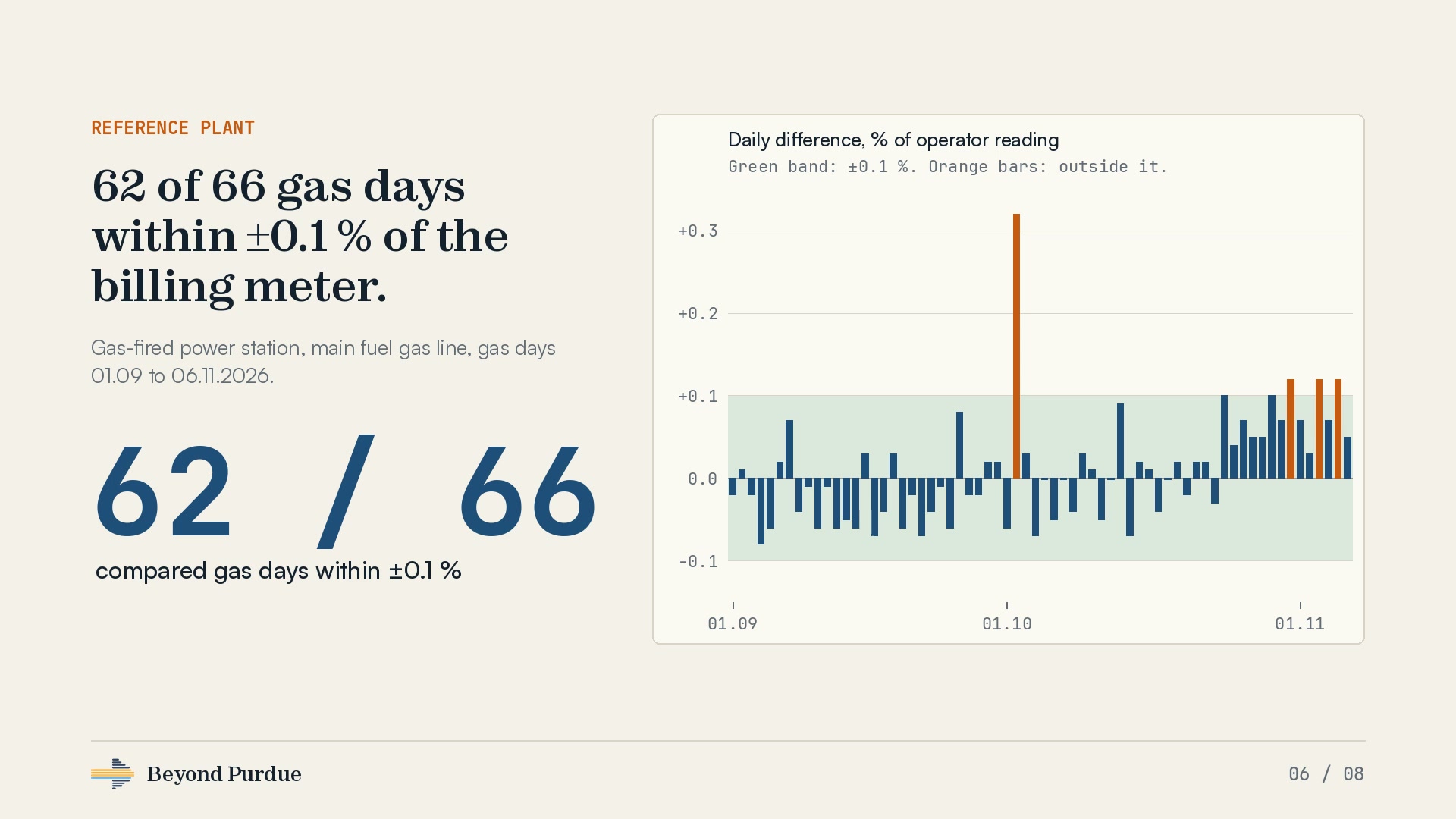
We did this on the main fuel gas line of a gas-fired power station. We read the DCS live and from its archive, reproduced its own calculation on a 1 second time base and checked every closed hour against the archive.
Over 66 gas days, 62 came within ±0.1 % of the billing meter and 65 within ±0.2 %. Over 7,816.50 MMScf the totals differ by 0.002. This is a calibrated archive comparison, not an independent billing validation. It shows what plain existing data can do when someone reads it properly.
Nothing in the control system was changed. No OEM work was needed.
How we do it
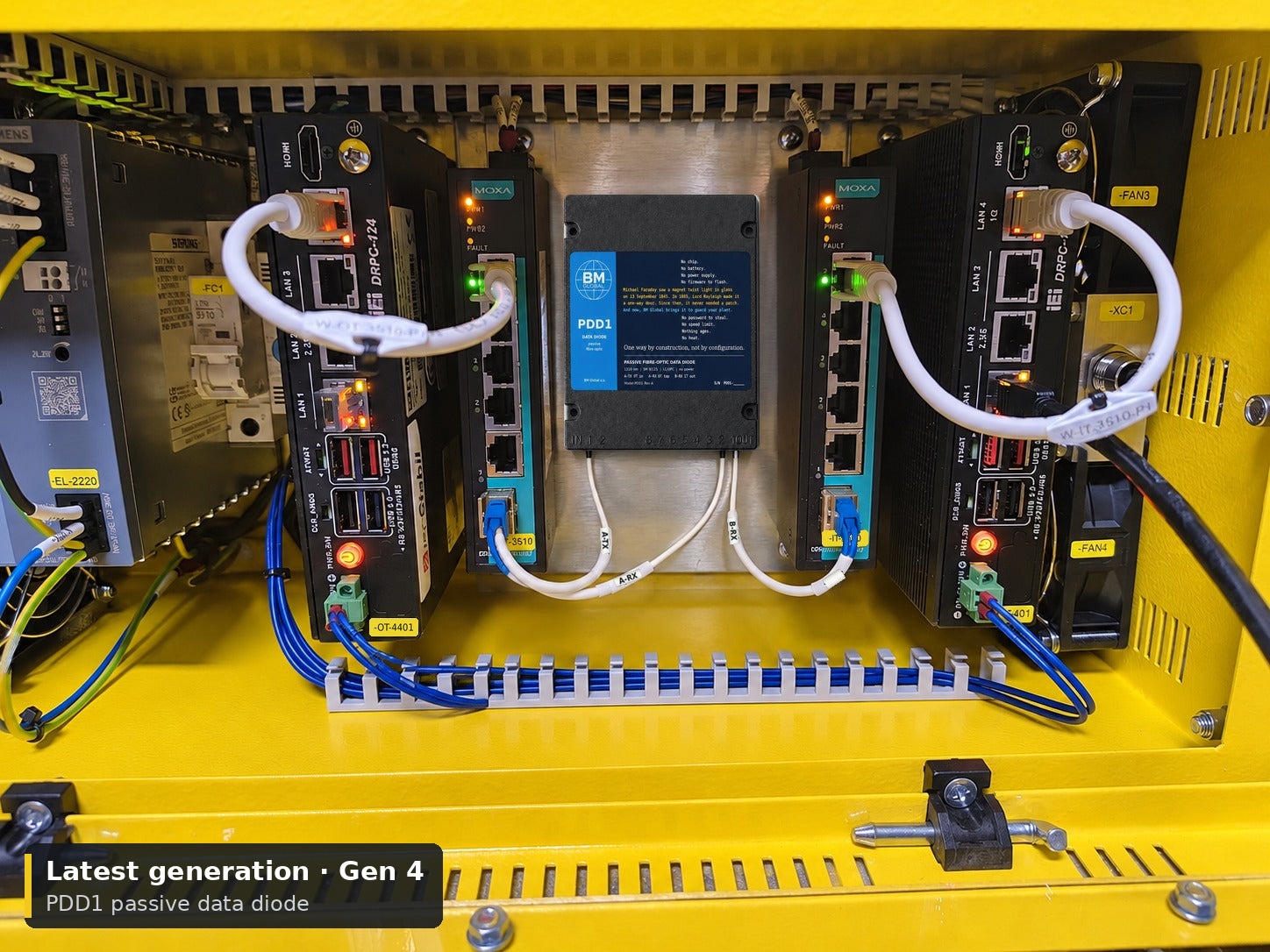
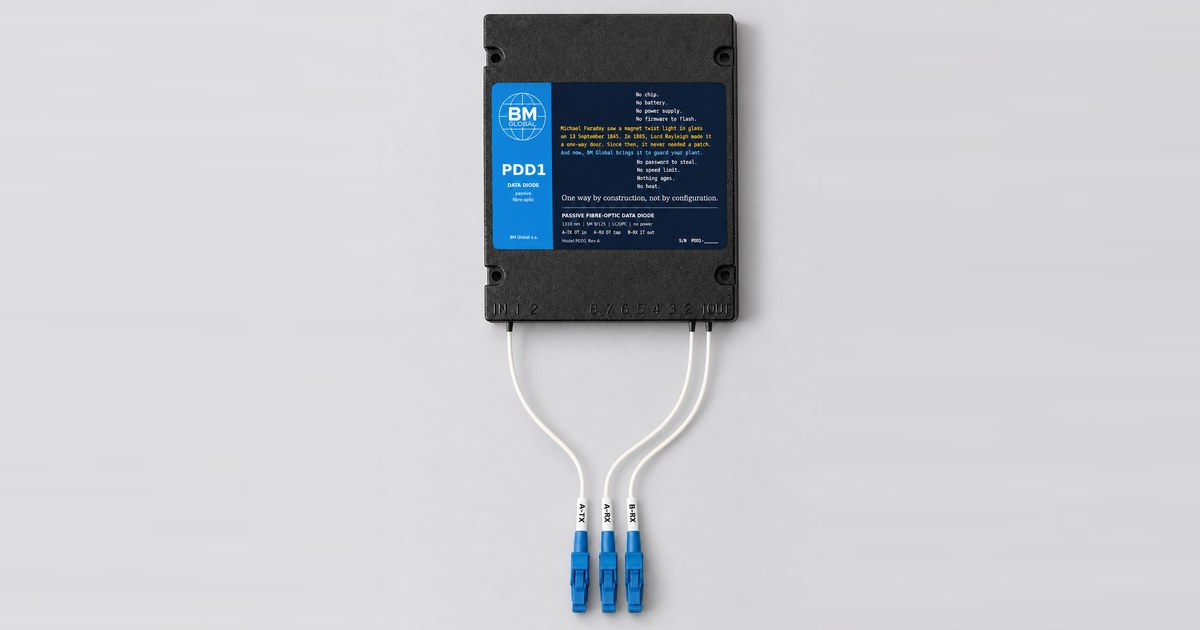
We call the small read-only unit that does this a data node. It listens to the control system, keeps what it hears and reports it. It never acts on the process. The video above shows one at work.
If you want to know how you can do that for your control systems, message me and get on a call with me (no obligations on your part).