Beyond Purdue No. 038 / Energy
Solar 506x more wasteful than nuclear
Every energy source has trade-offs. Let's demand higher standards, not double standards.
Every energy source has trade-offs. Let's demand higher standards, not double standards.
Response to Adam Helsel
Adam, you're right to ask whether lead ever becomes non-toxic. The answer is no. Lead is a stable element. It stays toxic forever.
Most solar panels contain about 14 grams of lead in solder joints. Over billions of panels, this is a massive permanent toxic inventory. Nuclear waste? Different story. Cesium-137 and Strontium-90 have 30-year half-lives. After 300-500 years, most fission products reach safe levels.
Waste per TWh
- Nuclear: 3.3 tonnes
- Wind: 160 tonnes
- Solar: 1,670 tonnes
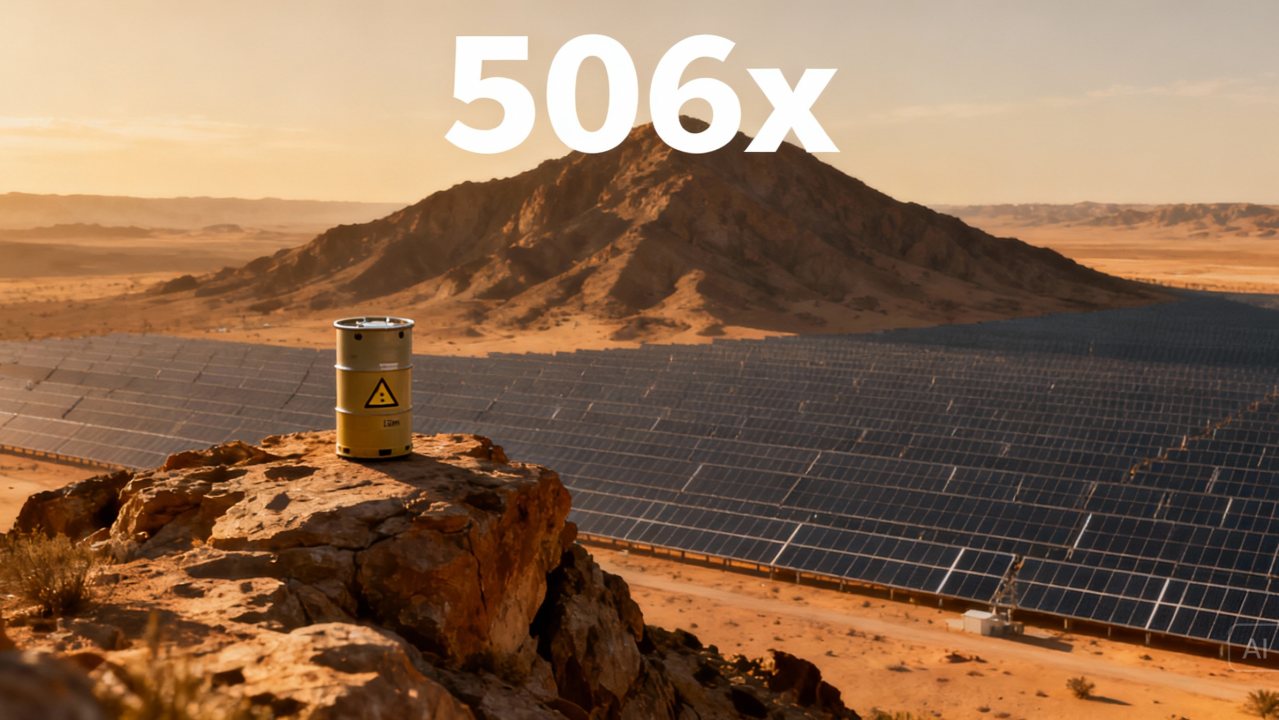
Solar produces 506 times more waste than nuclear by mass per energy unit.
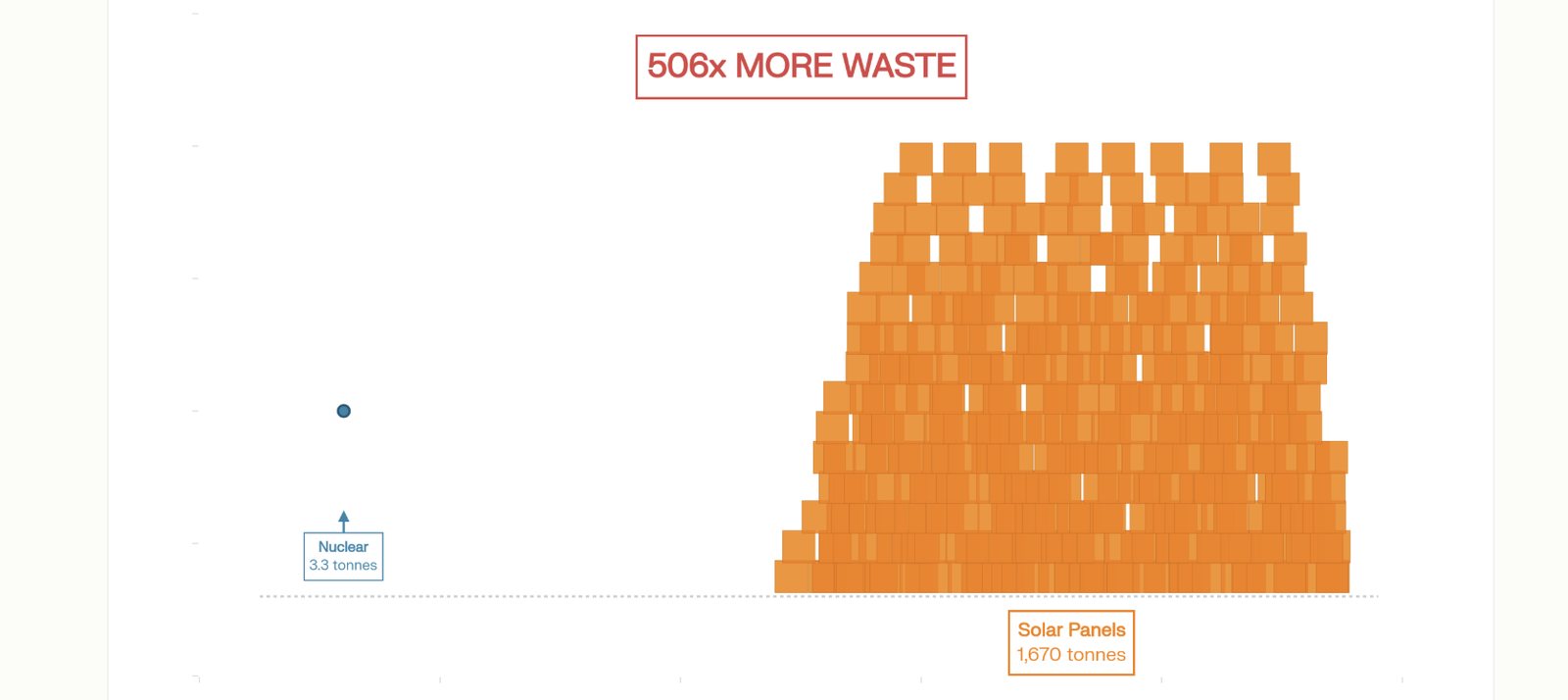
Volume comparison: All nuclear waste from 70 years of global power fits on three football fields. Solar will generate 60-78 million tonnes by 2050.
The real scandal: Nuclear waste is 100% tracked, regulated, stored in engineered facilities. Solar? Only 5-10% recycled globally. Most panels go to landfills or get exported to countries with weak regulations.
You're absolutely right about the volume disparity. For Czech Republic's 70 TWh annual consumption:
- Nuclear would generate 231 tonnes (2-3 shipping containers)
- Solar would generate 116,900 tonnes (730 Olympic swimming pools)
This isn't anti-solar. We need both technologies. But we can't apply extreme scrutiny to nuclear while giving solar a pass on lifecycle accountability.
What needs to happen:
- Mandatory producer take-back programs
- Material substitution (eliminate lead solder)
- Accelerated recycling infrastructure
- Global e-waste standards
Every energy source has trade-offs. Let's demand higher standards, not double standards.
Beyond the Waste Myth
The waste debate between nuclear and solar devolves into emotional arguments rather than technical comparison. Both technologies generate problematic waste. Both require sophisticated management. But they're fundamentally different problems.
Lead Never Decays
Lead is a stable element at the end of the radioactive decay chain. Whether in solder, batteries, or soil, lead remains toxic for geological timescales. This is an awkward truth the solar industry rarely emphasizes.
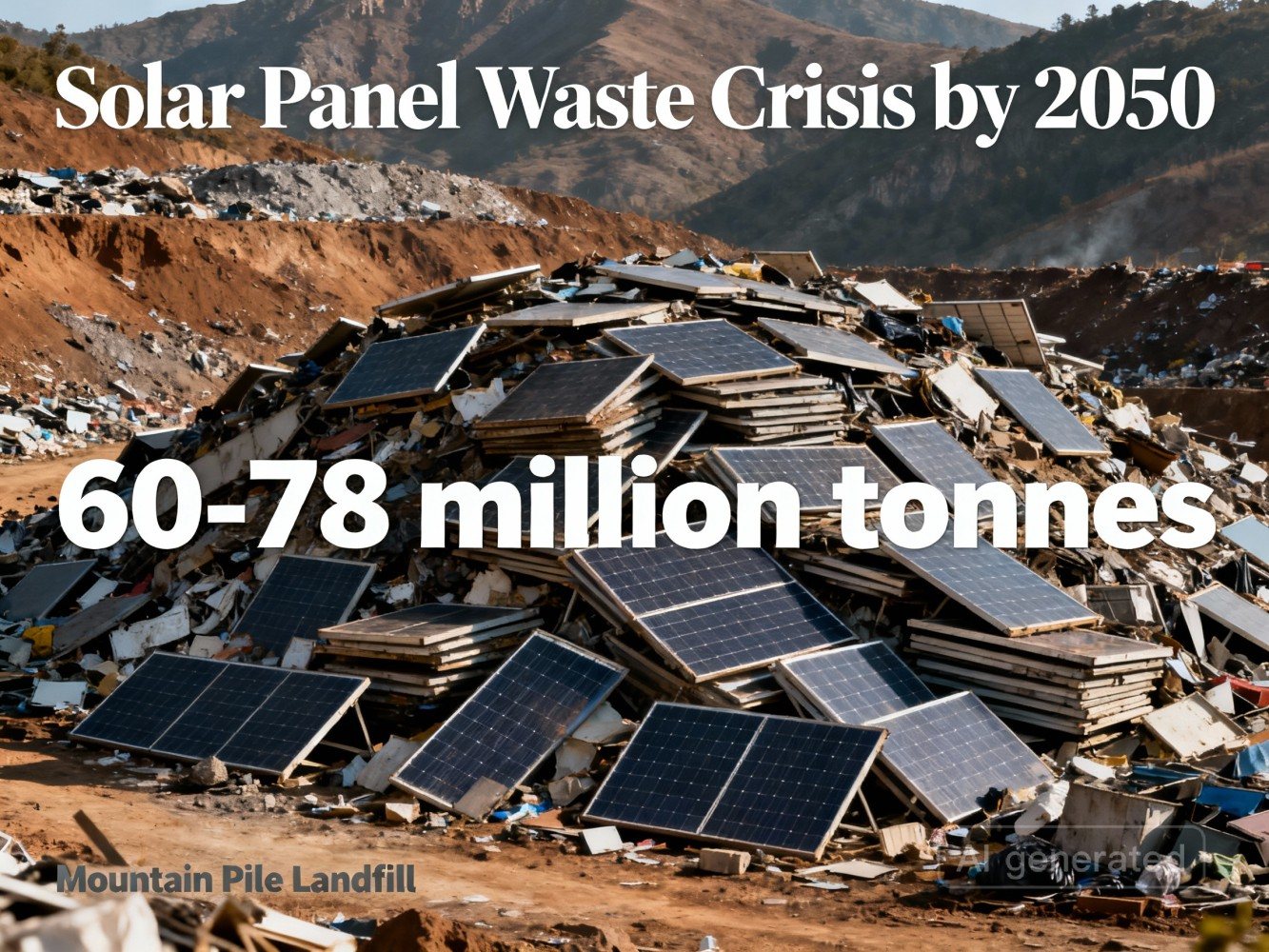
Most silicon solar panels contain approximately 14 grams of lead in solder used to connect cells. Over billions of panels installed, this becomes a massive permanent toxic inventory. By 2050, cumulative solar panel waste is projected to reach 60-78 million tonnes.
Nuclear Waste Becomes Safer
Nuclear waste presents the opposite trajectory. Spent fuel contains primarily Cesium-137 and Strontium-90, both with 30-year half-lives. After 300 years, most dangerous fission products decay to safe levels. After 500 years, high-level radioactive waste becomes safe enough to handle.
This fundamental difference rarely appears in mainstream climate discussions. One becomes safer. One doesn't.
The Numbers
Per terawatt-hour of electricity:
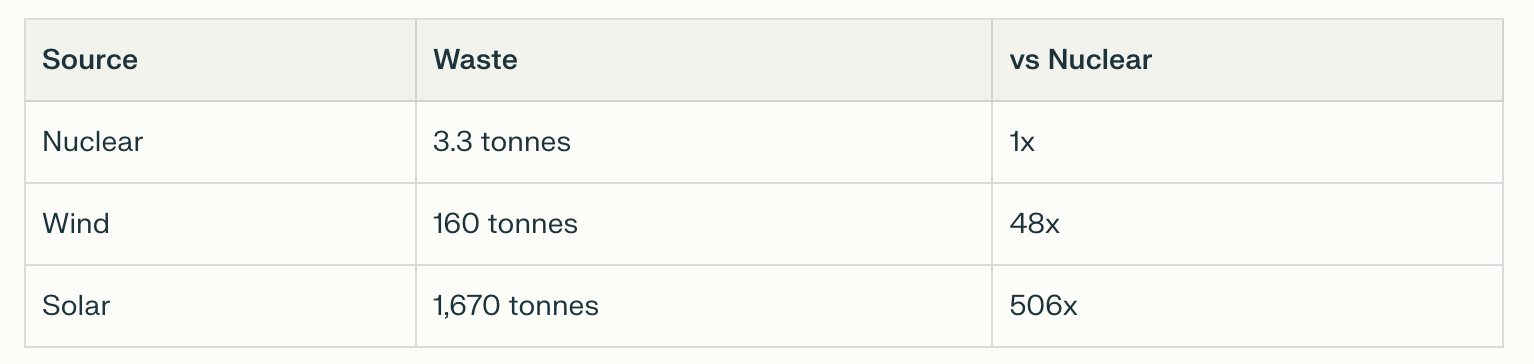
All radioactive waste from 70 years of global nuclear power fits on approximately three football fields to a depth of 10 yards. Solar panels installed to date represent 61 million tonnes of material requiring disposal within 20-30 years.
For Czech Republic's 70 TWh annual consumption:
- Nuclear: 231 tonnes (fits in 2-3 containers)
- Solar: 116,900 tonnes (equivalent to 730 Olympic pools)
Management: 100% vs 5-10%
Every gram of nuclear waste is tracked from creation to final storage. Governments mandate specialized handling, engineered containment facilities, geological repositories designed for millennia-scale isolation. Expensive, heavily regulated, systematic.
Current global solar panel recycling rates hover at 5-10%. Modern facilities can achieve 85-96% material recovery for silicon panels, but economics don't incentivize it. Recycling a panel often costs more than the recovered materials are worth.
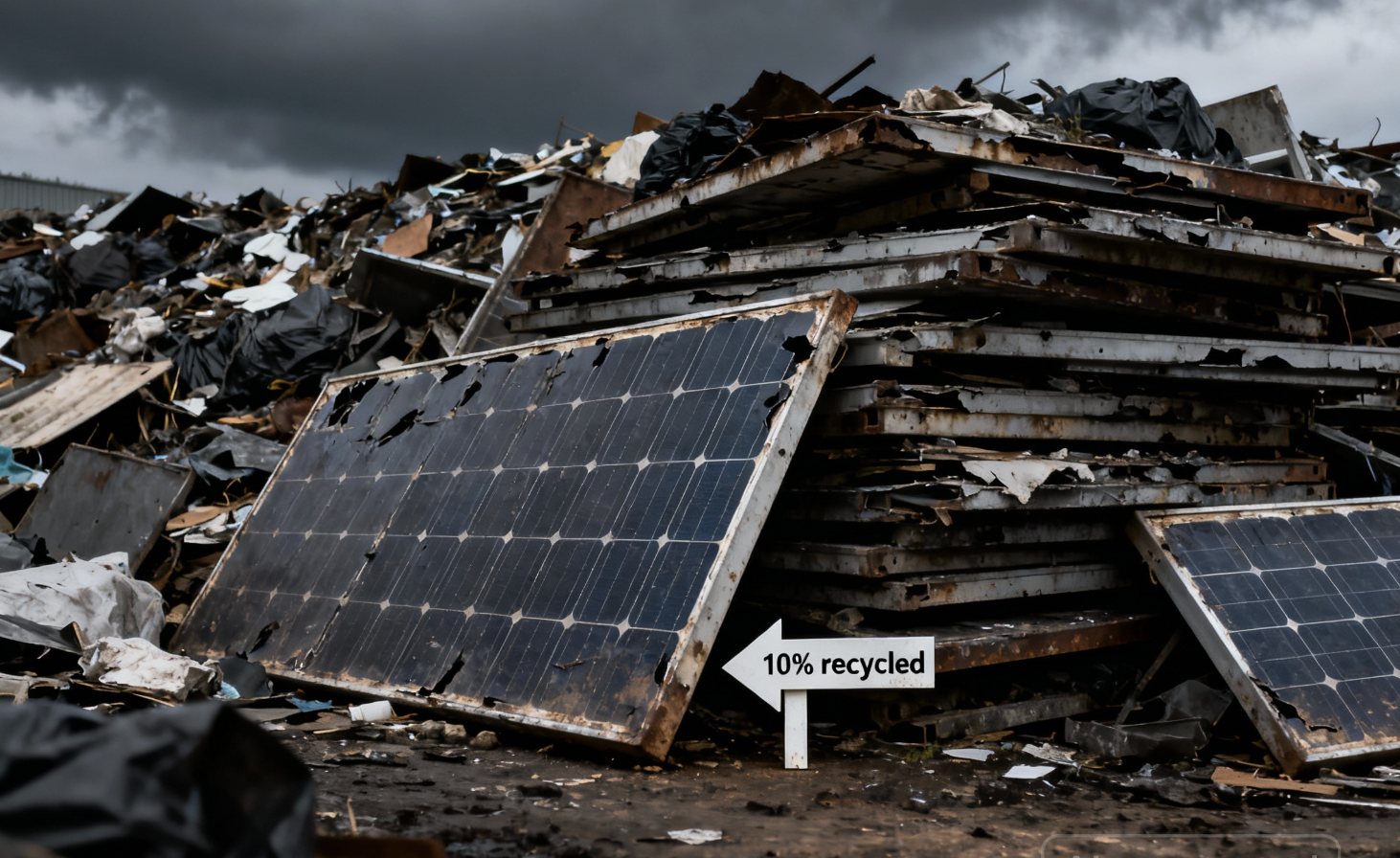
The result: most end-of-life panels go to landfills or are exported to developing countries with lax environmental controls. The first generation of mass-deployed panels is now reaching end-of-life. The recycling infrastructure isn't ready.
The Cadmium Question
Cadmium telluride solar panels represent only 5-12% of the global solar market. Cadmium in CdTe form has 1/100th the toxicity of free cadmium and is non-volatile and non-soluble in water. The concern becomes relevant at end-of-life, when proper recovery is essential.
The real issue isn't cadmium. It's lead. Every silicon panel contains it.
What Would You Rather Inherit?
Nuclear waste:
- Small volume (3.3 tonnes per TWh)
- Extremely dangerous initially
- Becomes safe in 300-500 years
- 100% tracked and contained
Solar waste:
- Large volume (1,670 tonnes per TWh)
- Moderately toxic permanently
- Never becomes safer
- 5-10% recycling rate
Both have challenges. Neither is "clean." But they're fundamentally different problems requiring different solutions.
The Path Forward
For solar:
- Mandatory producer responsibility
- Material substitution (eliminate lead solder)
- Economic incentives for recycling
- Transparent tracking
For nuclear:
- Complete geological repositories
- International frameworks
- Public confidence building
The waste argument isn't won by dismissing the other technology's challenges. It's won by addressing your own.
For solar: the first generation of panels is reaching end-of-life right now. Without rapid deployment of recycling infrastructure and material innovation, we're creating a permanent toxic legacy that undermines the environmental case for renewables.
Lead never becomes non-toxic. That's precisely why we must revolutionize solar recycling before the first generation of panels becomes a lasting environmental burden.