Beyond Purdue / AI
Why Intelligent Edge Matters — And Why So Many AI Platforms Fail Before They Start
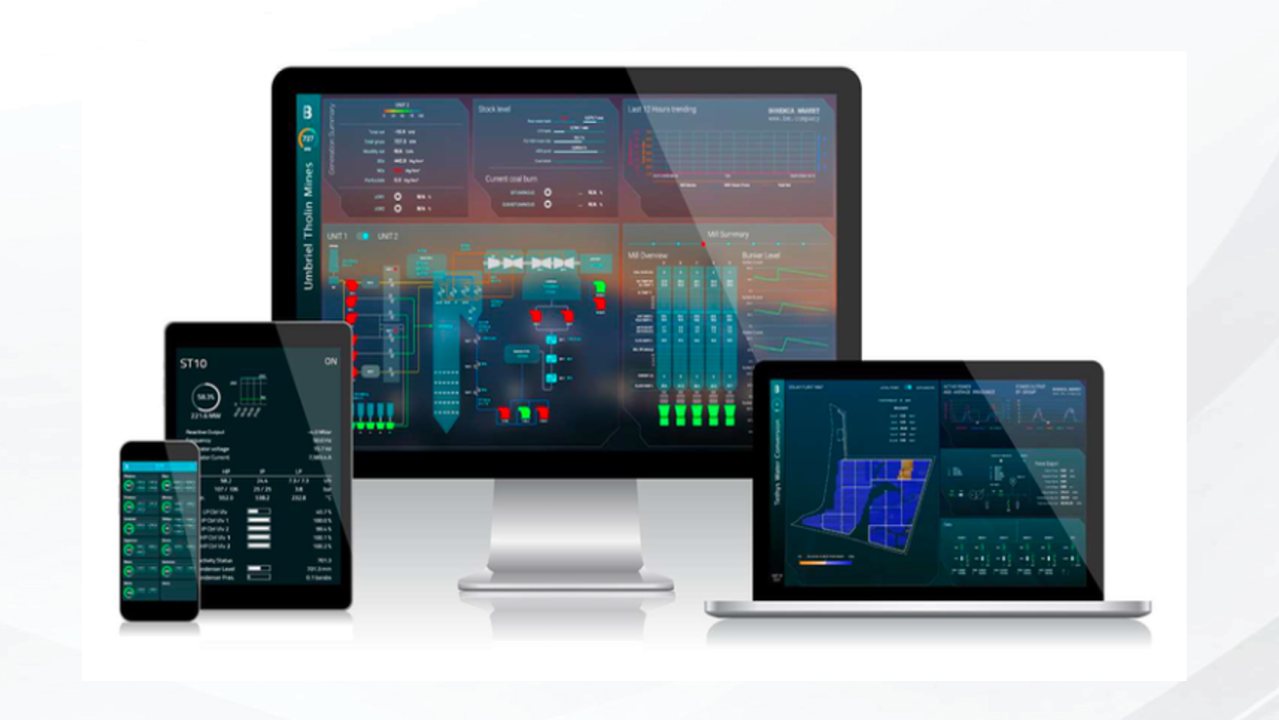
Everyone is building centralized platforms — AI-powered dashboards, command centers, “single sources of truth.”
Petr Roupec | Beyond Purdue Newsletter | June 2025
We live in a time when everything is becoming “AI-driven.”
Energy. Water. Industry. Cities.
Everyone is building centralized platforms — AI-powered dashboards, command centers, “single sources of truth.”
It sounds great. And to a large extent, it is the right direction.
But whenever I see these architectures, I keep thinking of something Nassim Taleb wrote in Antifragile:
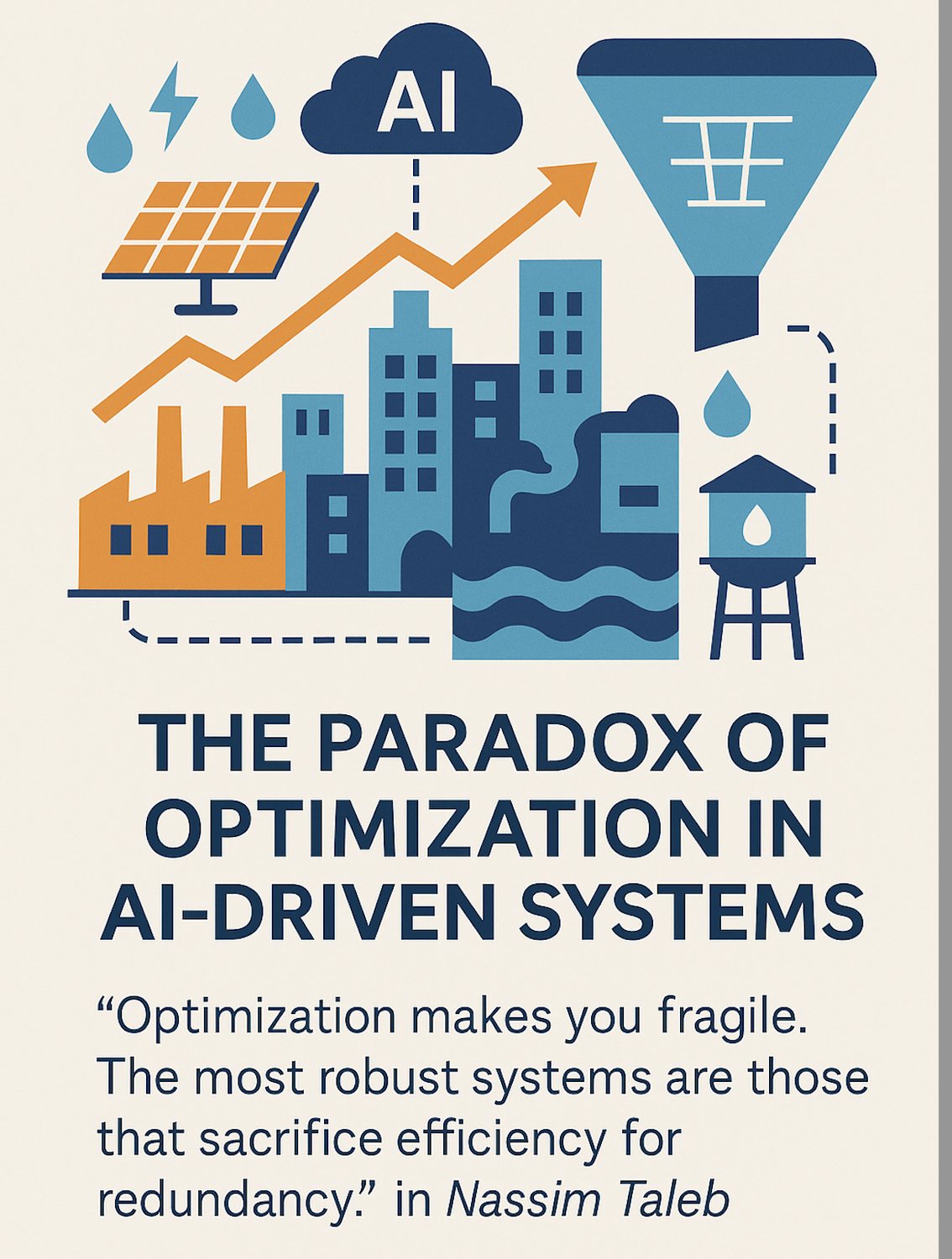
“Optimization makes you fragile. The most robust systems are those that sacrifice efficiency for redundancy.”
And in The Black Swan:
“The inability to predict outliers implies the inability to predict the course of history.”
In other words — the more perfectly optimized and centralized a system becomes, the more vulnerable it often is to unexpected disruptions.
And this is exactly the trap I see being repeated in many AI-driven industrial projects today.
I’ve spent a lot of time in real plants over the years.
Gas turbines. Power stations. Refineries. Solar farms.
What do I see? The same patterns — across continents, across industries.
Let’s be honest: most of our critical infrastructure still runs on legacy systems — many designed in the 1990s or early 2000s.
Cybersecurity wasn’t even a concept then. Data models were built around closed, proprietary systems. Every OEM had its own way of structuring data — and often still does.
In the typical plant today:
- A single sensor may appear with multiple names across different systems.
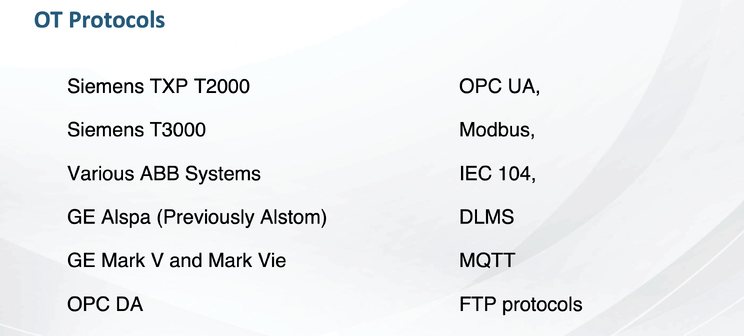
- OT protocols (TXP, T3000, ABB, GE, Modbus, OPC, MQTT…) remain a patchwork.
- IT systems often have no idea what incoming data really means — only the OT team does.
- Historians may contain gaps, inconsistencies, undocumented transformations.
- Manual interventions are still routine — and invisible to any centralized AI platform.
And yet — the trend is to build centralized AI platforms on top of this.
The thinking is seductive:
“We’ll collect everything in the cloud.” “We’ll use AI to find patterns.” “We’ll optimize efficiency and sustainability.”
But here’s the reality:
If the data at the source is fragmented, inconsistent, or missing context — no AI can magically fix that downstream.
You can’t “clean” meaning that was never there. You can’t “optimize” systems that are fundamentally opaque to your AI.
This is why I always say:
If you don’t fix the edge — your AI platform will fail before it starts.
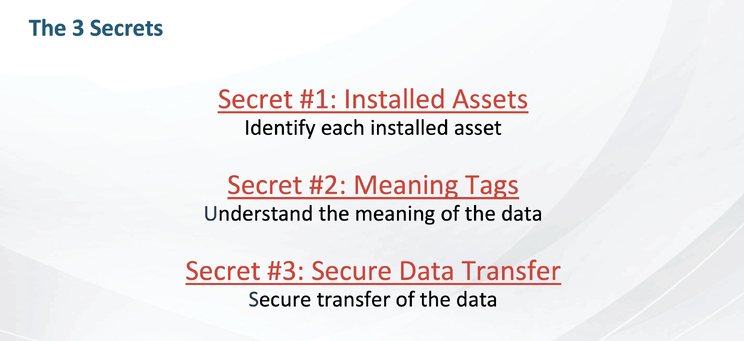
Over the years, I’ve come to describe this as three essential principles.
Not because it’s a clever model — but because this is what works in real plants:
First — Know what is installed.
You cannot manage, let alone optimize, what you don’t know you have.
In many plants, asset inventories are incomplete. Device configurations are undocumented. Data pathways are unclear.
You need full visibility:
- What devices are installed
- What protocols they use
- What data they generate — and what it means
Without this foundation, everything else is guesswork.
Recommended by LinkedIn
Second — Understand the data.
Raw data is not knowledge.
Values only become useful when they are properly structured, tagged, and carry meaning.
That’s why meaning tags — consistent, well-documented metadata — are essential.
If the AI platform receives raw numbers without meaning, it will either:
- Learn the wrong things, or
- Learn nothing at all.
Third — Secure the data transfer.
Industrial data must flow from OT to IT in a way that is both:
- Trusted — validated, timestamped, with traceable context
- Secure — without introducing cybersecurity risks
Uncontrolled “temporary” links, poorly configured bridges, or legacy IT-OT connections are a disaster waiting to happen.
Only structured, cyber-resilient pathways — built with proper architecture — will ensure that data flows safely to where it is needed.
When you apply these three principles — you transform the edge.
You don’t need to rip and replace every legacy system. You don’t need to spend millions on new hardware.
But you must apply engineering discipline:
- Full asset visibility
- Clear, structured data meaning
- Secure, validated data transfer
When that is in place — then your AI platform has a real chance to succeed.
Without it?
I’ve seen too many examples where beautiful dashboards and AI engines were built — and then quietly abandoned because the underlying data could not support them.
Which brings me back to Taleb’s warning:
“Optimization makes you fragile.”
An AI platform built on fragile, untrusted data flows will break the moment unexpected conditions arise.
And in critical infrastructure — unexpected conditions always arise.
The real future is not a choice between centralization and decentralization.
It is both.
Centralized AI platforms are needed — for optimization, forecasting, grid resilience.
But they must be fed by an intelligent edge — where data meaning is preserved, where quality is validated, and where operations can continue even if central connectivity is lost.
That is what we focus on in Beyond Purdue.
Not because it sounds good in a presentation. But because we’ve lived these problems in real plants. And we’ve seen how powerful it is when the edge is designed right.
As Taleb also wrote:
“Antifragility is beyond resilience or robustness. The resilient resists shocks and stays the same; the antifragile gets better.”
That is the goal.
Not just “efficient” systems. Not just “optimized” platforms.
Antifragile architectures — that continue to deliver value, even when conditions change.
If this resonates with you — if you are building AI platforms for critical infrastructure — and wondering why things aren’t as smooth as promised — I’m always happy to discuss.
Often the answer is simpler than you think.
But you must start at the edge.